Law-firm generative AI adoption has moved beyond isolated experimentation, but operational readiness remains uneven. 80% of respondents in a 2025 Law360 Pulse survey said their firms were using or exploring generative AI, while only 8% had deployed an enterprise AI assistant to every employee. Nearly 60% of firms using that assistant were still testing or piloting it, a gap that separates enthusiasm from dependable deployment. (Law360 Pulse survey)
That gap has consequences beyond internal productivity. A firm can use AI to draft research memos while lacking the governance to verify them, and it can publish authoritative legal content while remaining absent from the AI-generated shortlists prospective clients increasingly consult. The strategic issue is therefore not whether lawyers use generative AI. It's whether the firm can govern what AI produces internally and influence how AI represents the firm externally.
The State of Generative AI Adoption in Law Firms
The strongest adoption signal is not a prediction about the future. It's the speed of current movement. Thomson Reuters found that generative AI usage in the legal sector rose from 14% in 2024 to 26% in 2025, while 45% of law-firm respondents said they either already used GenAI or planned to make it central to their workflow within one year. The same reporting identified law firms as the strongest adopters among legal, tax, and risk professionals. (Thomson Reuters Institute adoption findings)
The headline is clear, but it can mislead leadership teams. Individual lawyers may experiment with drafting, summarization, or research while the firm has no approved tool list, no data-handling standard, and no defined reviewer. Adoption at the practitioner level therefore doesn't demonstrate organizational readiness. It demonstrates demand from professionals who are trying to solve real workflow problems.
The American Bar Association's 2025 Legal Industry Report summary offers a similar signal. 31% of respondents personally used generative AI at work, up from 27% the year before, while firm-wide adoption continued to lag because of policy and ethical concerns. (ABA 2025 Legal Industry Report summary)
The adoption picture is broad but incomplete
Law360 Pulse found that 54% of attorneys at private U.S. law firms were using generative AI for at least one use case, up from 35% in the prior year. Nearly 80% said generative AI had made their work easier, based on responses from nearly 400 attorneys collected from November 2024 to January 2025. (Law360 Pulse attorney survey)
The practical conclusion is more nuanced than “law firms are adopting AI.” Lawyers are adopting it faster than institutions are defining acceptable use. That creates a maturity gap in which shadow usage can become normalized before leadership understands what information enters external systems, which outputs reach clients, and where professional judgment remains mandatory.
| Source | Headline Metric | Reported Figure | Population |
|---|---|---|---|
| Thomson Reuters Institute | Legal-sector GenAI usage | 14% in 2024, 26% in 2025 | Legal, tax, and risk professionals |
| Thomson Reuters Institute | Planned or current centrality | 45% | Law-firm respondents |
| Law360 Pulse | Firms using or exploring GenAI | 80% | Law-firm survey respondents |
| ABA | Personal workplace GenAI use | 31%, up from 27% | Legal professionals |
| Law360 Pulse | Private-firm attorneys using GenAI | 54%, up from 35% | Attorneys at private U.S. firms |
These figures frame the market, but they don't settle the important questions. Accuracy, confidentiality, supervision, and external client-facing visibility determine whether adoption produces institutional value or merely more untracked activity.
What Generative AI Actually Means in a Legal Practice
Generative AI in a legal practice should be defined by its operating architecture, not by its ability to produce fluent text. A capable legal workflow uses a language model to generate a draft from retrieved, jurisdiction-specific, authoritative material. The system should show which sources informed the answer, restrict the context available to the model, and route substantive outputs through an accountable reviewer.
A generic model without those controls is like a junior researcher with broad language skills but no reliable research file. It may produce a plausible memorandum, yet plausibility doesn't establish that the cited authority exists, applies to the jurisdiction, or supports the conclusion. The quality of the output depends on the quality and permissions of the corpus surrounding the model.
Four controls define a defensible deployment
Grounding limits the model to approved legal sources, firm knowledge, matter documents, or other defined material. Grounding doesn't remove the need for review, but it narrows the space in which unsupported assertions can arise.
Citation traceability connects each substantive proposition to a source that a lawyer can inspect. A citation should be more than a decorative reference. The reviewer needs to determine whether the source supports the generated statement.
Prompt and context controls determine what the system receives and what it's permitted to do. A firm should distinguish between public information, confidential client information, privileged material, and internal know-how before building prompts or automations around them.
Output review assigns responsibility to a person with sufficient legal knowledge. Review should be proportionate to the consequence of the output. A draft internal outline and a client-facing advice memo shouldn't follow the same approval path.
The technical risk is substantial enough to require visual emphasis. The following infographic presents the required warning and verification framing.
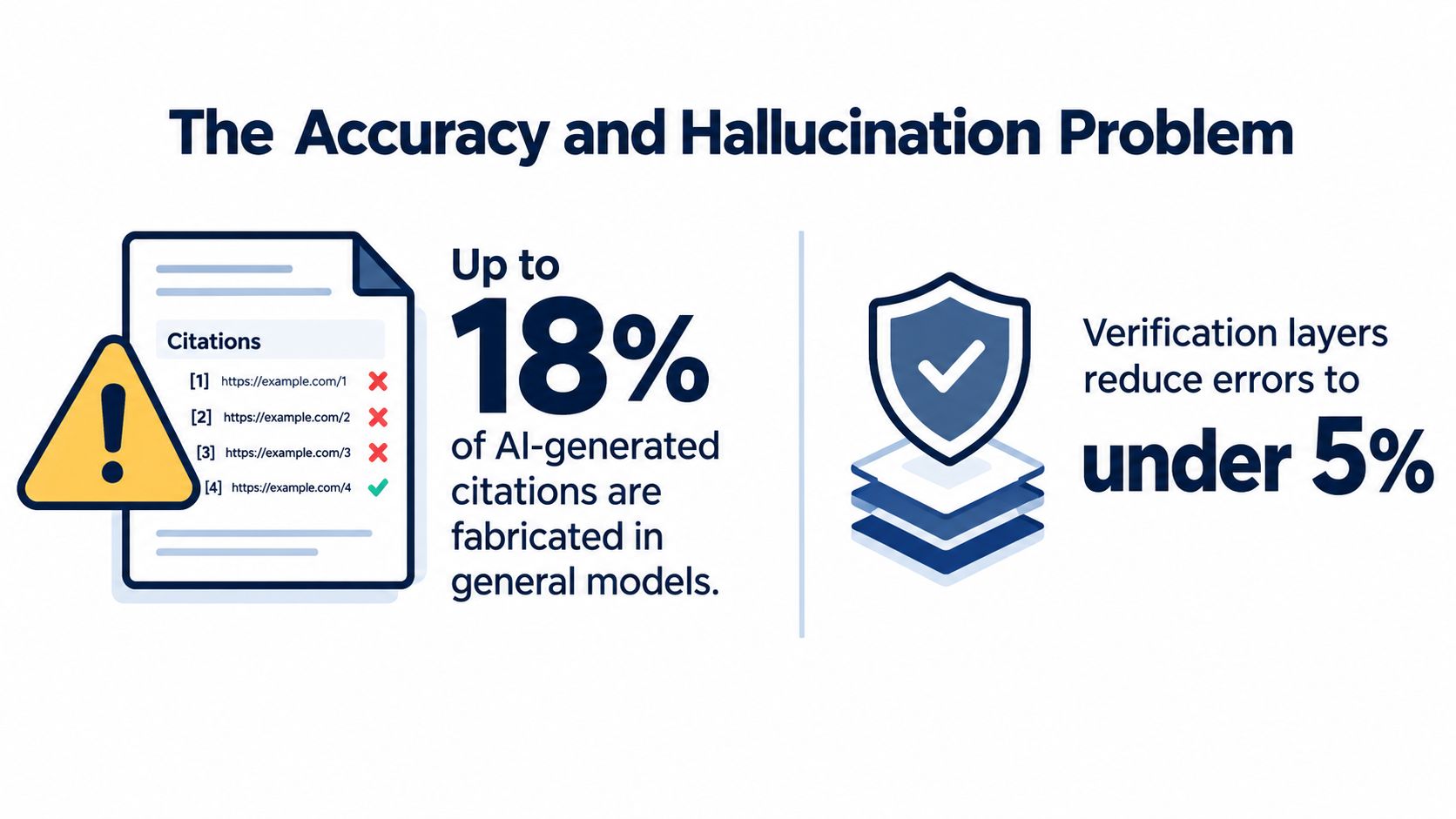
Treating generative AI as a generic productivity tool conceals these distinctions. Legal work is constrained by jurisdiction, authority, privilege, procedural posture, and professional duties. A system that ignores those constraints may save time at the drafting stage while creating additional verification work later.
Practical rule: The firm should approve a workflow, not merely approve a tool. The workflow must specify permitted data, source boundaries, reviewer responsibility, and escalation when the system cannot support an answer.
High-Value Use Cases Inside the Firm
The strongest early use cases create a useful intermediate work product while leaving legal judgment with a lawyer. Research summaries, document drafts, and intake classification fit this model. Each can reduce repetitive effort, provided the firm defines the data permitted, the source boundaries, and the person accountable for review.
Research becomes faster only when verification remains explicit
A grounded system can assemble a first-draft research memo from approved authorities, extract relevant passages, and organize issues by jurisdiction. Its value is operational. It reduces the mechanical work of finding, sorting, and formatting material, while the lawyer remains responsible for confirming that each authority is current, relevant, and accurately represented.
Law360 Pulse reported that 84% of respondents expected AI to summarize complex documents within 12 months, up from 70% the prior year. (Law360 Pulse deployment and use-case findings) That expectation supports summarization as a practical early use case. It does not support treating a generated summary as a substitute for reviewing the underlying record.
The firm should also preserve the source trail. A summary without document references may be convenient, but it makes omissions and context errors harder to identify. Source-linked outputs give the reviewer a defined path from the generated text back to the approved material.
Drafting supports lawyers, but does not own the record
Contract clauses, correspondence, and internal templates suit controlled drafting workflows. The lawyer can specify the clause objective, governing jurisdiction, fallback position, and required approvals before reviewing the generated language against the matter record and firm standards.
The risk rises when a first draft enters a client deliverable without a named reviewer. The system may omit a defined term, introduce language inconsistent with the negotiation, or rely on an assumption absent from the file. Drafting automation works best when the firm has stable templates, clear escalation rules, and a documented final review.
Those controls also create useful evidence about how the firm operates. That evidence can later support internal governance and the accuracy of information used when external AI systems assess or shortlist firms for a client need. A firm that cannot describe its review boundaries internally will have difficulty making credible claims about its capabilities externally.
Intake classification needs guardrails from the start
An intake assistant can collect preliminary information, identify the apparent practice area, flag conflict-related details for human handling, and route a matter to the appropriate team. It should not provide definitive legal advice, promise representation, or make an eligibility decision without human oversight.
Intake and drafting are suitable priorities because both can be bounded by defined inputs and review checkpoints. Substantive research can benefit as well, but it needs stronger source controls. An unsupported proposition can pass into a pleading or advice memo before anyone recognizes the gap.
| Use Case | Workflow Stage | Deployment Signal | Review Requirement |
|---|---|---|---|
| Document summarization | Internal analysis | Strong near-term expectation | Lawyer checks omissions, context, and source relevance |
| Research memo drafting | Legal research | Experimentation is common, rollout remains uneven | Lawyer verifies each authority and conclusion |
| Contract clause drafting | Document production | Controlled use varies by firm | Matter lawyer reviews language against instructions |
| Client intake routing | Business development and triage | Early-stage and workflow dependent | Staff or lawyer confirms classification and responses |
Firms assessing implementation options can review this guide to AI tools for law firms, then test each option against confidentiality, source, approval, and escalation requirements.
The right question is which workflow produces a measurable operational benefit while preserving a clear chain of human responsibility. That standard treats generative AI as a governed recommendation process rather than a faster drafting tool.
The Accuracy and Hallucination Problem
Legal hallucination is not an edge case that leadership can solve with a reminder to “check the answer.” Industry coverage of a Stanford HAI study reported that general-purpose chatbots hallucinated on legal queries 58% to 82% of the time, compared with about one in six queries for specialized legal AI models. The same source reported that 79% of surveyed attorneys were concerned about AI's imperfect understanding of legal ethics and standards. (Stanford HAI findings cited in legal-industry coverage)
A wrong answer in a casual context can be corrected. A fabricated citation in a pleading, research memorandum, or client communication can mislead a lawyer, waste review time, damage credibility, and create professional exposure. Fluency increases the danger because a confident sentence can receive less scrutiny than an obviously poor one.
Verification must be designed into the system
Retrieval-grounded systems reduce risk by restricting generation to approved material and exposing source traces. Domain tuning can improve the model's handling of legal terminology and patterns, but it doesn't remove the need for verification. The reviewer must still inspect the source, confirm the proposition, and determine whether the authority applies to the matter.
A defensible workflow should therefore include:
- Source-linked answers: Require the system to identify the supporting passage or document.
- Unsupported-claim handling: Route uncertain or ungrounded outputs to a human rather than forcing completion.
- Matter-level permissions: Prevent unrelated or unauthorized client information from entering the context.
- Review checkpoints: Require sign-off before substantive content reaches a client, court, regulator, or opposing counsel.
Hallucination should be treated as an architectural property of language models, not a defect that a later policy can somehow erase. Firms need grounding, provenance, and human verification before they expand use into substantive legal work. The interpretation gap in AI recommendations reflects a related problem externally, where systems may generate a coherent description without accurately representing a firm's authority or suitability.
Governance, Policy, and the Maturity Gap
Governance is the binding constraint because firms can acquire model access faster than they can define responsibility. Thomson Reuters reported that 48% of law-firm professionals still lacked formal GenAI policies, even as usage rose from 14% in 2024 to 26% in 2025. (Thomson Reuters professional-services report)
That mismatch creates shadow AI. Lawyers may choose tools based on convenience, enter information without a shared classification standard, and produce drafts that no policy identifies as requiring special review. Leadership then discovers usage through an incident, a client question, or an inconsistent work product rather than through an inventory.
Four dimensions reveal whether governance is real
Policy coverage defines permitted and prohibited use. It should address client data, privilege, public systems, attribution, review, and records retention in language that lawyers can apply to actual matters.
Approved tool inventories establish which systems the firm has evaluated. An inventory should include the intended workflow, data boundary, model behavior, access controls, and owner. Approval without a use case leaves too much room for interpretation.
Training and competency give lawyers and staff practical instructions. Training should include source verification, confidentiality handling, prompt discipline, escalation, and examples of unacceptable output.
Audit and incident response create institutional memory. Firms need to know how to record a problematic output, assess whether confidential information was exposed, determine who must be notified, and update the relevant control.
| Governance Dimension | Mature Posture | Typical Firm Posture |
|---|---|---|
| Policy coverage | Tiered rules tied to data sensitivity and workflow risk | General caution without operational detail |
| Approved tool inventory | Named systems, owners, permitted uses, and review dates | Informal adoption with incomplete visibility |
| Training and competency | Role-specific instruction and recurring refreshers | Uneven knowledge concentrated among early adopters |
| Audit and incident response | Logged outputs, escalation paths, and corrective action | Reactive investigation after a problem appears |
Governance doesn't have to slow adoption. Clear permission removes uncertainty, allowing lawyers to use approved workflows without debating basic questions each time. The firms that treat governance as operating infrastructure can move faster because responsibility, review, and escalation are already defined.
How Generative AI Shapes Client Acquisition and AI Recommendations
The same systems that help lawyers evaluate information are changing how prospective clients evaluate firms. A client may ask an AI assistant to identify counsel for a specific dispute, regulatory matter, transaction, or jurisdiction. The assistant's shortlist depends on how well its underlying sources describe the firm, connect the firm to the relevant matter, and support that connection with evidence.
This creates a three-layer distinction that leadership should keep intact:
- SEO helps systems discover you. Search optimization supports crawlability, relevance, and visibility in traditional ranking environments.
- Generative engine optimization helps systems extract and understand you. GEO and answer engine optimization, or AEO, improve the structure and clarity of information that answer systems may use.
- AI recommendation intelligence measures whether systems trust and recommend you. The focus shifts from being present somewhere in the index to achieving citation presence, narrative depth, and shortlist inclusion.
Visibility is not the same as recommendation authority
A firm can rank well for broad legal topics and still fail to appear when a user asks for a shortlist of firms suited to a narrow matter. The system may not have enough coherent evidence connecting the firm's attorneys, practice areas, jurisdictional experience, industries, and outcomes to that decision context.
CitationOS describes its research across 116 firms, with 78% invisible to AI recommendations, based on 16 months of diagnostics. Those findings point to a structural problem: traditional online presence doesn't automatically translate into AI recommendation authority. The relevant measures include AI Visibility Index (AVI), citation presence, narrative depth, entity authority, and top-3 rate.
Internal readiness and external representation are connected, but not identical. A firm that governs its own AI-generated content carefully is more likely to produce consistent, source-supported material. That material gives external systems clearer signals about what the firm does and where it belongs in a recommendation.
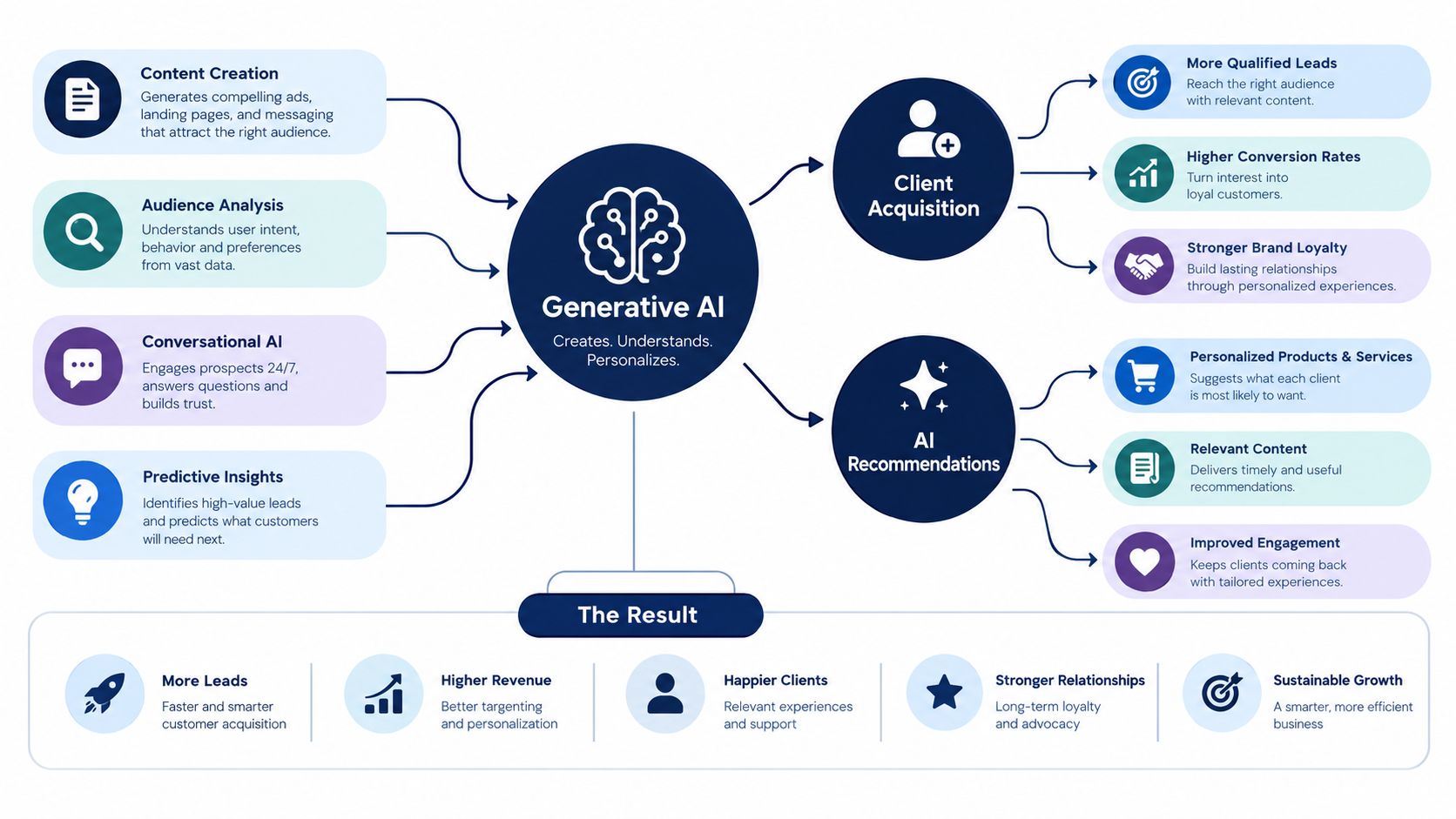
The practical implication is not that internal AI usage automatically improves acquisition. It's that both problems require the same institutional discipline: accurate entities, authoritative sources, consistent descriptions, and reviewable evidence. Leaders can explore the distinction further through this overview of generative engine optimization.
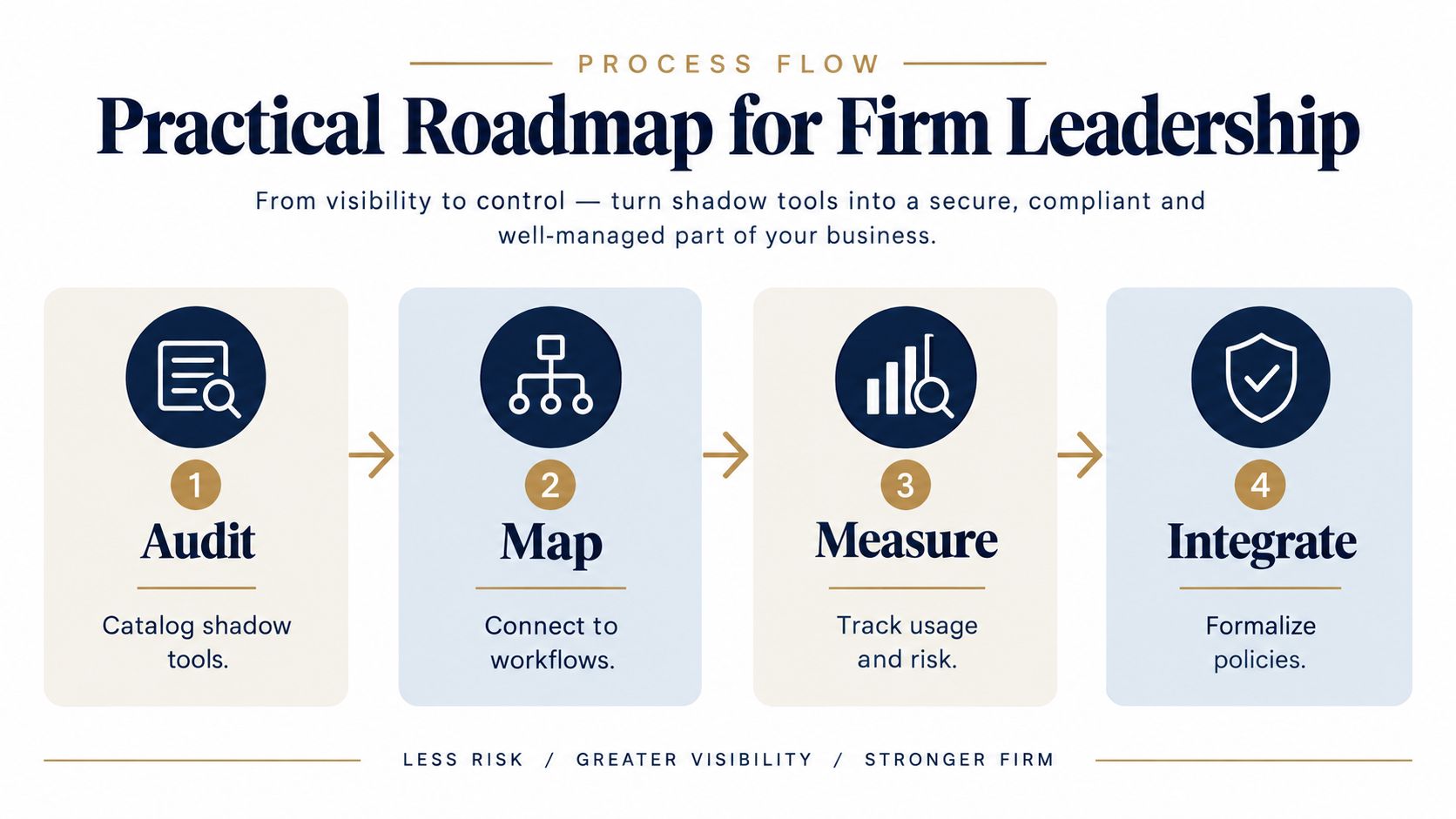
A Practical Roadmap for Firm Leadership
Leadership should sequence adoption as an operating program rather than selecting a vendor and waiting for usage to spread. The first task is to establish what already happens inside the firm, then define acceptable behavior, and finally measure whether internal discipline improves external representation.
Start with an evidence-based audit
Catalogue every AI system already used by lawyers, assistants, marketing teams, and operations staff. Include informal use, browser-based tools, embedded features, and automated workflows. The inventory should record the practice area, data entered, output produced, reviewer, and whether the output can reach a client or third party.
Next, separate internal drafts from client-facing artifacts. A system used to summarize a public article presents a different exposure from one used to prepare a matter chronology from confidential documents. This distinction lets leadership prioritize controls instead of treating every use as equally risky.
The first checkpoint is a signed tool inventory with named owners and workflow classifications.
Publish governance that lawyers can apply
Create a tiered acceptable-use policy. It should state which information may enter approved systems, which tasks require human review, which uses are prohibited, and how lawyers should report an error or suspected exposure.
Assign a risk owner with authority to approve workflows and stop unsafe use. The owner may work with technology, risk, knowledge management, and marketing teams, but responsibility shouldn't be distributed so widely that nobody can make a decision.
Require human-in-the-loop review for any client-deliverable artifact. Review should test factual accuracy, source support, confidentiality, tone, and matter-specific fit.
The second checkpoint is a policy signed by leadership and acknowledged by users, not merely stored in an internal repository.
Measure internal discipline and external representation
A firm should audit its own authored content for citation quality, entity consistency, and practice-area clarity. Then it should establish a baseline for how AI assistants describe the firm in high-intent prompts. The baseline should track citation presence, narrative depth, top-3 rate, and the AI Visibility Index where those measures are available.
A quarterly review can compare changes in policy adherence, approved workflow usage, error reports, and external AI representation. The purpose isn't to manipulate answers. It's to identify where the firm's actual authority fails to translate into machine-readable evidence.
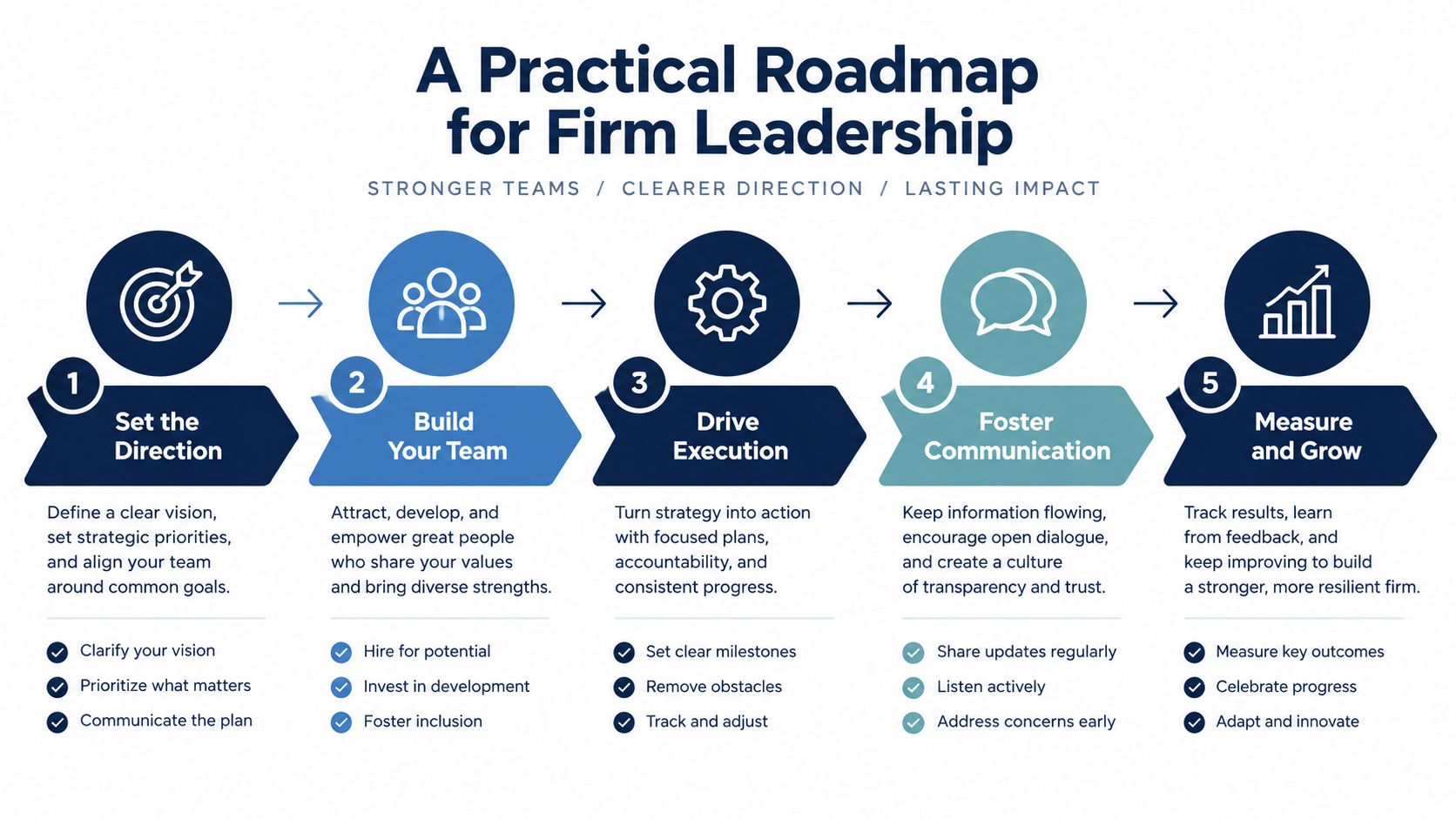
The third checkpoint is a citation audit and baseline recommendation measurement. A one-quarter project can create initial controls, but it won't establish durable behavior or a reliable trend. Leadership should treat the work as a 12-month operating cadence, with recurring audits, training, policy updates, and measurement.
The Strategic Implication Leaders Should Not Miss
Generative AI for law firms is often framed as a productivity decision. That framing is too narrow. The technology now affects how work is produced inside the firm and how the firm is interpreted outside it.
A retrieval-grounded system with source traces can help lawyers create more dependable internal material. A governance policy can define who reviews it and what happens when the system is wrong. Consistent, verified authorship can also give external AI systems clearer evidence when they decide whether to describe, cite, or recommend the firm.
The reverse is also true. Uncontrolled experimentation can produce confident but unsupported material, inconsistent practice descriptions, and unclear entity signals. Those weaknesses affect client trust directly and can make it harder for recommendation systems to connect the firm with the matters it wants to win.
Internal AI competence now conditions external AI representation.
This is a positioning problem as much as an IT problem. Managing partners who treat AI readiness as core infrastructure will connect service delivery, governance, marketing, and client acquisition through a common evidence standard. Those who treat it as a collection of disconnected experiments may increase usage without increasing readiness.
The firms most prepared for the next stage won't necessarily be the firms with the most tools. They'll be the firms that can prove what their systems know, who verifies the output, how the firm is represented, and why an AI assistant should include them in a high-intent shortlist.
CitationOS provides confidential AI citation audits, representation analysis, competitive benchmarking, entity consistency assessment, and ongoing measurement of how systems such as ChatGPT, Gemini, and Perplexity cite and recommend law firms. Visit CitationOS to establish a baseline for your firm's citation presence, narrative depth, and AI recommendation authority.