
Most advice on a local citation audit starts from the wrong premise. It treats citation work as a directory cleanup exercise, then assumes clean listings will translate into visibility, trust, and selection. For law firms, that's too shallow. Accurate NAP data is necessary, but it isn't sufficient, because search and AI systems now evaluate whether the entity is coherent, authoritative, and describable across multiple layers of discovery and recommendation.
That shift is not theoretical. BrightLocal's data shows the perceived importance of quality citations over quantity rose by 15% year on year and 22% since 2013 (5WPR research page). In other words, the market already moved from volume to quality before AI answer engines became a factor. A modern local citation audit has to reflect that change, or it becomes a cosmetic cleanup that leaves the actual selection problem untouched.
The Structural Purpose of a Modern Citation Audit
A citation audit used to be framed as a count-and-correct task. That model no longer fits a legal market where the same firm has to be legible to search engines, directory ecosystems, and AI systems that synthesize answers from scattered sources. The audit is really a structural diagnostic, a check on whether the firm's digital identity is internally consistent enough to be trusted when a client is choosing counsel under time pressure.
The historical record shows why quality overtook volume. As citation work became more focused on accuracy, trust, and source quality, the function of the audit changed with it (5WPR research page). For professional services, that matters because a clean listing profile can still leave a firm underrepresented in recommendation systems. The key question isn't whether a firm exists online. It's whether the firm is represented in a way that systems can reliably interpret.
Practical rule: A citation audit should be treated as a test of entity coherence, not a tally of directory placements.
That distinction becomes sharper in AI-mediated discovery. A law firm can be present across major directories and still fail to surface in shortlist contexts if its identity is fragmented across names, addresses, service descriptions, and source references. The internal logic of the firm's public record has to line up before any downstream selection layer can work properly. That's why the audit belongs closer to diagnostics than to housekeeping.
The visibility problem is described clearly in this analysis of the visibility fallacy. Citation presence is only one layer. Recommendation readiness is another.
Establishing the Canonical Entity Record
Before touching external listings, lock one source of truth. That canonical record should define the exact Name, Address, and Phone combination the firm wants every system to understand, then preserve the same spelling, formatting, and ownership logic across internal documents and public profiles. If the firm has moved, rebranded, or changed phone infrastructure, the canonical record has to reflect the current reality, not the most convenient version.
Search for the firm the way the market searches for it
A useful audit doesn't stop at the legal name. Query the firm using the legal name, DBA, old phone numbers, prior addresses, suite number variants, and obvious misspellings. Brand-only searches miss misnamed records, and that blind spot is one of the most common reasons stale citations survive long after a firm thinks they've been corrected (Digital Sky Rocket). Search blindness and data drift are the operational risks here, not just clutter.
A firm that searches only its preferred brand name is auditing the version of itself it already knows.
Build the log before you chase the listings. Each row should capture the live URL, platform type, ownership status, exact NAPW, duplicate status, and a priority note. That structure turns the audit into a usable cleanup pipeline instead of an undifferentiated list of mentions. It also helps you sequence fixes by authority and downstream impact, which matters when bad data is being republished across the ecosystem.
A practical pattern is simple. Use the canonical record as the comparison point, then track every deviation against it. If the profile is unclaimed, duplicated, outdated, or partially complete, record that status immediately. The point is not to admire the breadth of the problem. The point is to expose the firm's full external identity before fixing anything.
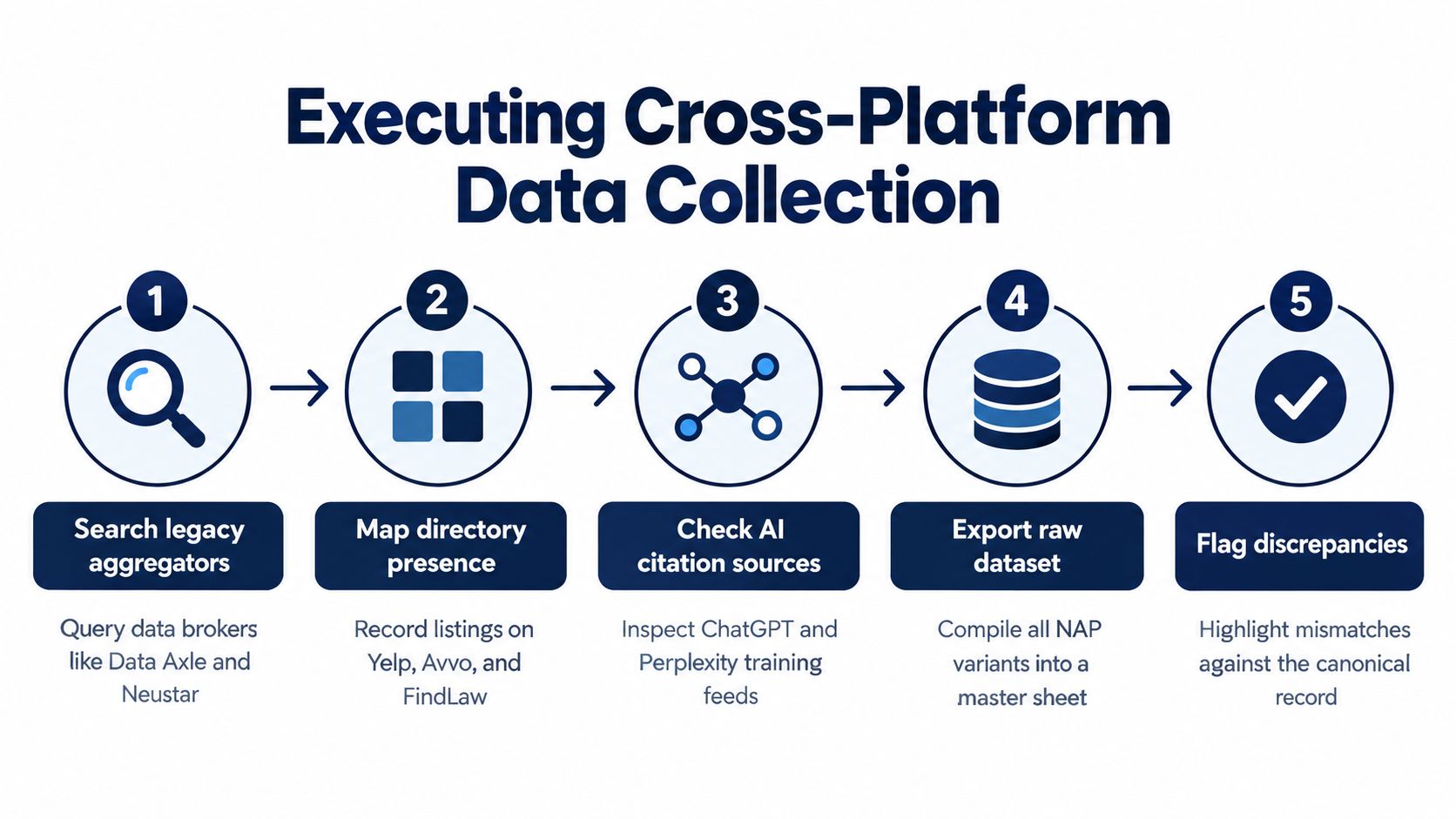
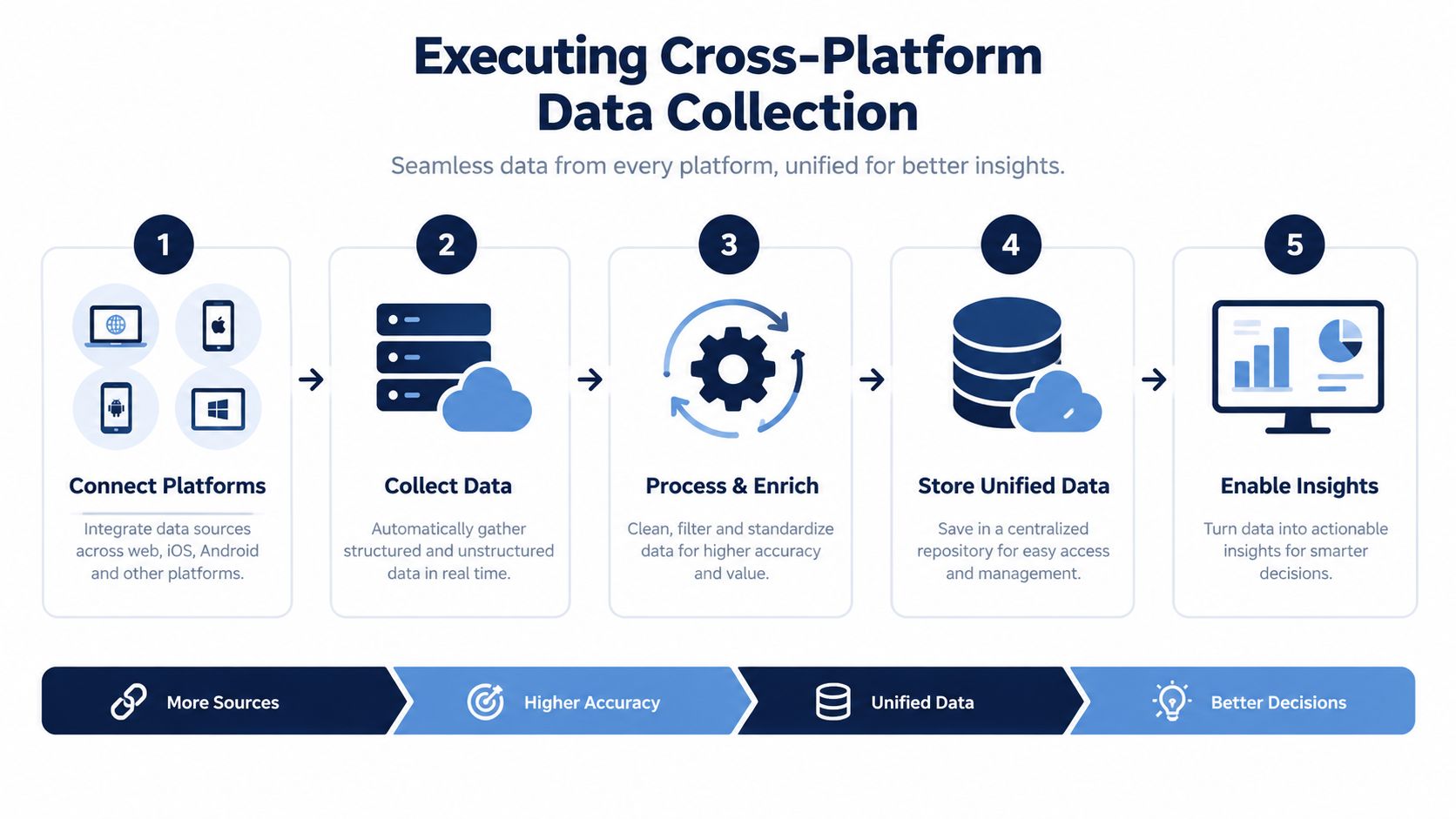
Executing Cross-Platform Data Collection
A modern audit does not stop at directories. It has to collect evidence across legacy business listings, structured data sources, and answer engines because representation is now distributed across systems, not confined to one profile page. One 2026 law-firm audit model covered 20 high-value buyer-intent queries across ChatGPT, Perplexity, and Google AI Overviews, producing approximately 1,500 data points by measuring appearance frequency, position, and depth of context (5W research page). That scale shows how far the workflow has moved beyond basic listing verification.
Queries have to reflect buyer intent, not vanity search terms
The right query set is practice-area specific and decision-specific. Generic branded searches tell you little about how the market sees the firm in a high-intent context. The better model uses phrasing that mirrors how prospects ask for help, then observes whether the firm appears, where it appears, and how much context accompanies the mention.
Another independent legal AI visibility study described a broader audit spanning 50–100 practice-area and firm-specific queries across ChatGPT, Claude, Perplexity, and Google AI Mode, plus citation-source mapping, LinkedIn and Knowledge Graph assessment, and schema and robots.txt review (Everything PR). That breadth matters because the system being audited is not just local search. It's the full representation stack.
The methodology overview reinforces the need to treat source mapping, entity consistency, and answer-engine visibility as one workflow. The same firm can be discoverable in one environment and structurally absent in another. That gap is why cross-platform collection has to capture not just whether the firm appears, but the form of its appearance.
The evidence set should include context, not just presence
A useful dataset tracks appearance frequency, position, and depth of context because those dimensions tell different stories. Frequency shows whether the entity shows up at all. Position shows whether it is named early or late. Context depth shows whether the system is making a confident recommendation or just mentioning the firm in passing. A simple yes-or-no scrape misses all of that.
The lesson is operational, not philosophical. A local citation audit that stays inside directory counts is measuring the wrong object. Once the inquiry crosses into answer engines, the audit becomes representation analysis. That is the actual diagnostic workload.
Diagnosing Entity Consistency and Narrative Depth
Once the raw data is collected, the question changes from “where is the firm listed” to “what story does the market receive about this firm.” That story is built from fragments. A directory entry, a directory aggregator feed, a review platform, a knowledge panel, and structured schema all contribute to whether the firm looks stable and relevant. AI systems do not need every source to be perfect, but they do need the pattern to be coherent.
One practical way to read the data is to classify every record into good, missing, error, duplicate, or other. That cleanup pipeline helps separate noise from structural weakness (Qliqqliq). Major platforms and aggregators come first, because their errors spread farther. Lower-value directories can wait until the core record is stable. That sequencing matters more than doing everything at once.
Incomplete fields do more damage than many teams expect
The most common technical issues are not dramatic. They're formatting drift, outdated addresses after a move, phone-number contamination from tracking numbers, duplicate profiles, and incomplete fields beyond NAP, such as categories, hours, and service-area notes (Qliqqliq). Those gaps weaken entity authority because they force systems to infer where they should be able to verify. In legal services, inference is a liability. A prospect searching for a complex matter should not have to guess whether the firm handles the right geography or practice area.
A firm can be listed correctly and still be described too thinly to earn a recommendation.
That's where narrative depth enters the audit. AI systems are not just reading one profile. They are building an understanding from distributed signals. If the same firm is precise on address but vague on service categories, the entity may look real yet unconvincing. If it is complete in some channels and incomplete in others, the representation layer becomes unstable.
The consumer side makes the trust problem more concrete. 71% of consumers reported a negative experience in the last 12 months because of incorrect local business information online (Qliqqliq). For a law firm, that kind of error is not only a search issue. It is a credibility problem that can interrupt intake, weaken confidence, and create avoidable friction before a consultation even starts.
The audit therefore has to read consistency and depth together. A clean NAP record is the floor. A coherent story across services, locations, and source types is what starts to influence recommendation readiness.
Prioritizing Corrections for AI Recommendation Authority
Not every citation deserves the same effort. The common mistake is to treat all listings as equally important because they all contain the same fields. They don't. Some sources act as authority nodes, others as downstream distributors, and many have little practical relevance beyond basic presence. The audit should reflect that hierarchy.
The clearest framework is to correct the sources that carry authority and then work outward. High-authority records and aggregators come first because they can republish inaccuracies into other directories. Industry-specific sources come next because they tell the market the firm belongs in the category it wants to own. Low-value directories sit at the bottom unless they are the only place a useful citation gap remains.
Source authority should drive the order of repair
| Source Tier | Examples | Correction Priority | AI Impact |
|---|---|---|---|
| Core authority sources | Canonical business profile, major aggregators, primary legal profiles | Highest | Strong downstream effect on entity consistency |
| Industry-relevant sources | Legal directories, bar association listings, practice-area profiles | High | Helps category fit and narrative depth |
| General directories | Broad business listings and local directories | Medium | Useful for breadth, weaker on specialization |
| Low-value listings | Sparse, obscure, or thinly used directories | Low | Limited impact unless they contain an error that spreads |
That ordering is not about prestige. It's about propagation. A wrong phone number on a high-authority source can echo through the ecosystem, while a low-value listing might remain isolated. Fixing the isolated problem first is wasted effort.
Correction order matters more than correction volume.
Competitor overlap also belongs in this phase. If rival firms dominate the same niche directories and the same practice-area references, that overlap is a signal about where the market expects authority to live. The audit should identify those overlaps and compare the firm's footprint against them before deciding where to spend time. A citation graph that looks busy but fails to match the relevance pattern of serious competitors is structurally weak.
This is also where CitationOS fits as one option in the audit stack. It provides confidential AI citation audits, entity consistency assessment, and benchmarking across AI environments, which makes sense for firms that need to understand recommendation readiness rather than just listing accuracy.
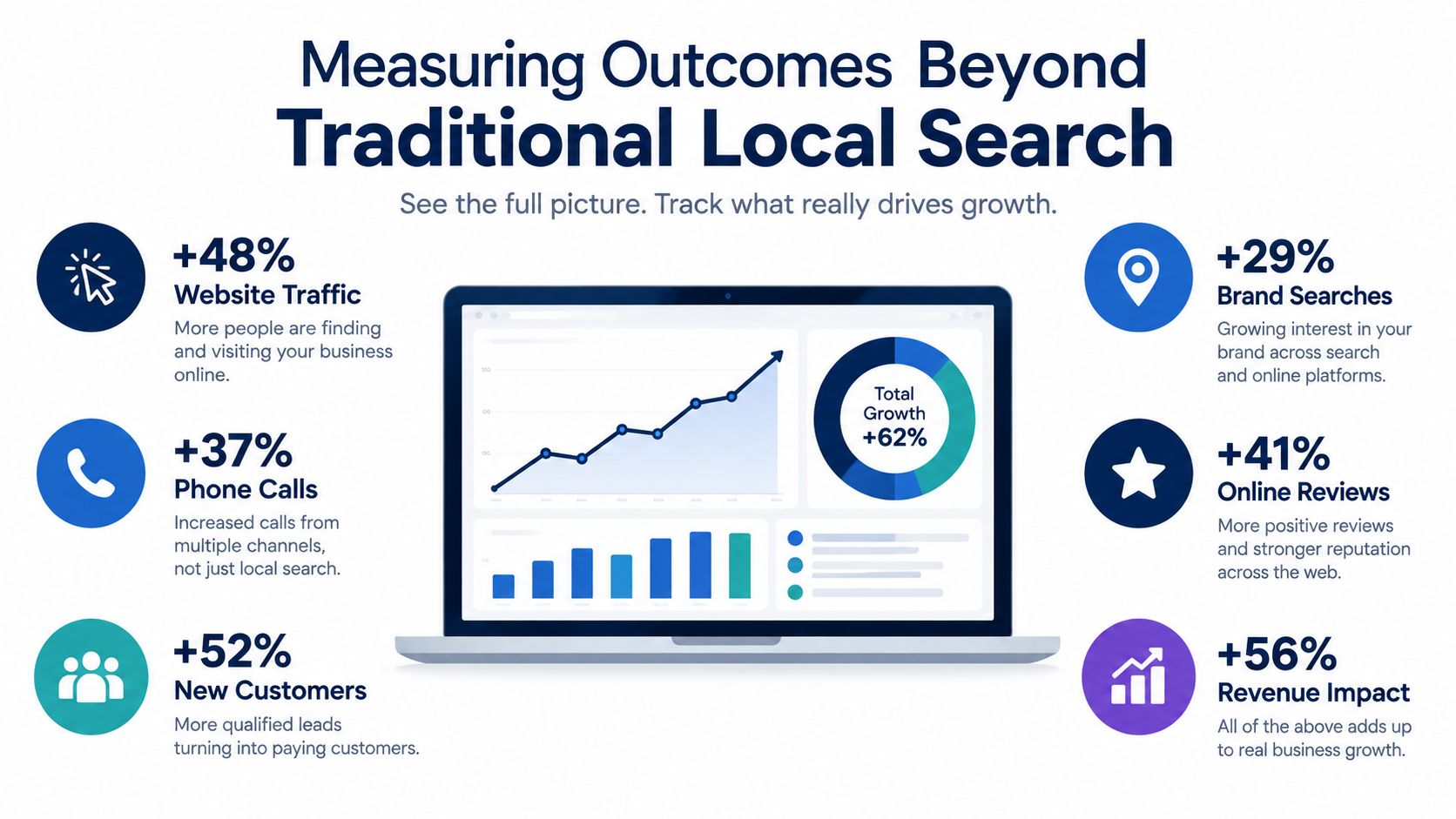
Measuring Outcomes Beyond Traditional Local Search
The last mistake is to stop measuring once the cleanup is done. That produces a false sense of completion. A firm can have accurate listings and still remain absent from the narrow shortlist that matters in AI-mediated discovery. The right baseline has to include citation presence, top-3 rate, and narrative depth inside AI-generated responses, not just local pack placement.
The law-firm SEO audit guidance is relevant here because SEO still matters for discovery. But the hierarchy is clear. SEO helps systems discover you. GEO helps systems extract and understand you. AI recommendation intelligence measures whether AI trusts and recommends you. Semrush defines AI visibility as how often a brand's domain is cited as a source in an AI answer, while the GEO distinction separates ranked links from citation authority inside answer engines (Semrush AI Visibility Index; 5W research page).
The real metric is shortlist inclusion
That distinction is where most local citation audits end too early. A firm may be visible in directories, clean in NAP, and recognized in search, yet still fail to appear in AI recommendations because the model doesn't see enough coherent authority to include it. A 2026 legal-services white paper says firms should continuously monitor how each AI tool cites the brand so off-page gaps can be flagged as they appear (Search Engine Land guide). That's the right measurement posture.
The implication is blunt. The audit target is not broad visibility. It is presence in the short list that the system names. If the firm is not named, the market never reaches the point of comparison. That is why the audit has to end with an entity baseline that is designed for ongoing monitoring, not a one-time cleanup report.
For legal executives, the practical takeaway is simple. A local citation audit is no longer a directory project. It is a diagnostic for whether the firm is structured to be discovered, understood, and recommended across the systems that now shape shortlist decisions.
CitationOS measures that gap directly. It evaluates citation presence, narrative depth, entity consistency, and AI recommendation authority across the systems that matter to legal buyers. If you want to see whether your firm is accurately listed but still structurally underselected, visit CitationOS and use it to benchmark the recommendation layer, not just the directory layer.